

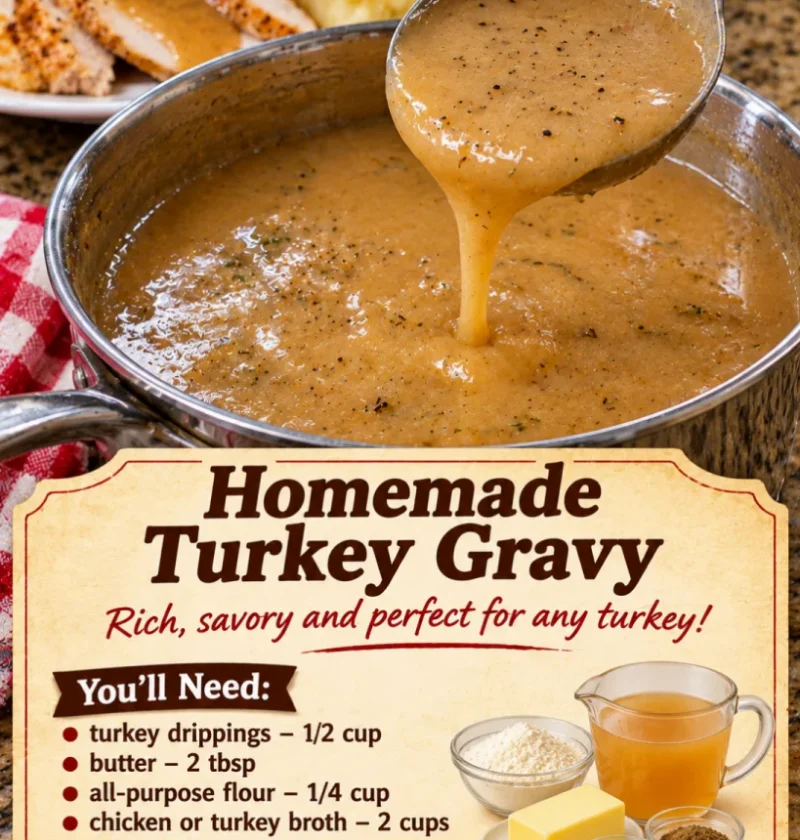
There’s something truly special about Homemade Turkey Gravy that elevates a holiday dinner from ordinary to extraordinary. Rich, savory, and full of flavor, this gravy is the quintessential accompaniment to a beautifully roasted turkey, particularly during Thanksgiving. The beauty of homemade turkey gravy lies in its ability to capture the essence of the bird from which it is made, using drippings and broth to create a sauce that is both comforting and delicious. This recipe not only focuses on using those precious drippings but also incorporates easy techniques that ensure your gravy is thick, rich, and full of depth. The process allows for an element of creativity, making each batch unique to your family’s tastes and traditions. Whether you’re a seasoned cook or a beginner, this guide will walk you through the process of making the best turkey gravy for Thanksgiving, ensuring a delightful experience for you and your guests, and creating lasting memories around the dinner table. The satisfaction of homemade turkey gravy will make your holiday meals feel more personal and connected. Plus, the aroma that fills your kitchen while preparing this gravy will have everyone eagerly anticipating the feast to come.
Ingredients
- Turkey Drippings: 1 cup (from your roasted turkey). Ensure that you collect all the flavorful bits stuck to the bottom of the roasting pan, as they provide a depth of flavor that is irreplaceable. The drippings are crucial for achieving that iconic turkey flavor, so don’t skip this step. If you find yourself short on drippings, you can supplement with additional broth for balance and flavor enhancement.
- Broth: 2 cups (chicken or turkey broth preferred). Using homemade broth will enhance the flavor significantly; however, store-bought options work well too, especially if low-sodium varieties are chosen. Homemade broth, made from simmering bones and vegetables, can provide a richer base for your gravy, while store-bought is a convenient alternative. Opting for high-quality broth will make a noticeable difference in the final taste.
- Butter: 1/4 cup (unsalted). Unsalted butter allows you to control the salt content of your gravy, making it easier to season to your taste. It adds a creamy richness that balances the flavors beautifully. For a slightly different flavor profile, you could choose to brown the butter before incorporating it to introduce a nuttier taste.
- All-Purpose Flour: 1/4 cup (for thickening, see tips for gluten-free options). This flour will help create a smooth consistency; however, you can also use a gluten-free alternative if necessary. Make sure to use a fine flour to avoid any graininess in your final product. Sifting the flour before use can also help achieve a smoother texture.
- Salt: To taste. This is crucial because the amount needed will vary based on the saltiness of your drippings and broth. Start with a small amount and adjust as necessary for the best flavor. Remember, it’s easier to add more salt later than to correct an overly salty gravy.
- Pepper: To taste. Freshly ground black pepper will provide the best flavor and aroma. Consider using white pepper for a more subtle spice that won’t darken your gravy. If you’re feeling adventurous, try adding a pinch of cayenne pepper for a hint of heat.
- Herbs: 1 teaspoon dried thyme, or 1 tablespoon fresh thyme (optional, for added flavor). Fresh herbs can elevate your gravy, adding brightness and complexity to the dish. You can also consider adding other herbs like sage or rosemary for a different flavor profile; don’t be afraid to experiment! Fresh herbs should be chopped finely to release their oils and flavors more thoroughly into the gravy.
For a gluten-free turkey gravy, you can substitute the flour with cornstarch or a gluten-free flour blend. Ensure your broth is also gluten-free. You can learn more about this topic. When it comes to herbs, feel free to experiment with others like rosemary or sage to find your perfect flavor profile. Fresh herbs should be chopped finely to release their oils and flavors more thoroughly into the gravy, significantly enhancing the overall taste and aroma.
Steps / Instructions
- Collect the Drippings: After roasting your turkey, carefully pour the drippings from the roasting pan into a fat separator. Allow it to sit for a few minutes so the fat rises to the top. This step is crucial, as it will prevent your gravy from being overly greasy. Reserve 1 cup of the drippings, discarding any excess fat for a better texture and taste. Remember to scrape up any browned bits from the pan, as these add incredible flavor. If you have a lot of drippings, feel free to adjust the amount you reserve while maintaining the overall balance in your recipe.
- Prepare the Roux: In a medium saucepan over medium heat, melt the butter slowly to avoid burning it. Add the flour, whisking continuously for about 1-2 minutes until the mixture is light golden and bubbly. This step creates a roux that will help thicken your gravy. The longer you cook the roux, the deeper the flavor will become, so don’t rush this process. A well-cooked roux will also help prevent a floury taste in your finished gravy. The color of the roux can also indicate the flavor profile; a darker roux can contribute a nuttier flavor.
- Add the Drippings: Slowly whisk in the reserved turkey drippings until fully incorporated. The mixture will begin to thicken as you stir. Continue whisking to smooth out any lumps, which is essential for achieving that silky gravy texture. This is where the flavor really starts to shine, as the drippings contribute their unique taste and aroma to your homemade turkey gravy. Keep an eye on the consistency; it should be smooth and velvety.
- Incorporate Broth: Gradually add the broth, whisking continuously. Bring the mixture to a gentle boil. This helps to fully develop the flavors and thicken the gravy. Cook for about 3-5 minutes until you reach your desired consistency, stirring occasionally to prevent sticking. If you prefer a thinner gravy, you can add a bit more broth until it reaches your desired texture. Testing the gravy’s thickness on the back of a spoon is a useful visual cue.
- Season: Taste your gravy and season with salt, pepper, and thyme if using. Adjust the seasoning as necessary to enhance the flavor. Keep in mind that flavors will deepen as the gravy simmers, so be cautious with initial seasoning. The goal is to achieve a well-balanced flavor that complements your turkey and sides. If you’re unsure about the seasoning, serve a small taste alongside your turkey for a perfect pairing check.
- Serve: Once your gravy is at the desired thickness and flavor, remove it from the heat. Transfer to a serving dish or gravy boat and serve warm with your turkey and sides. Drizzle generously over mashed potatoes or stuffing for an indulgent touch. You can also garnish with a sprinkle of fresh herbs for an elegant touch. Presenting your homemade turkey gravy in a beautiful vessel can elevate the entire dining experience.
Tips & Tricks
- Thickening Turkey Gravy: If your gravy is too thin, mix 1 tablespoon of cornstarch with 1 tablespoon of cold water to create a slurry. Gradually add this to the gravy while whisking until it thickens to your liking. This method prevents lumps and ensures a perfect texture. Be sure to allow the gravy to simmer for a couple of minutes after adding the slurry to fully incorporate the cornstarch. Remember, you can always add more broth if it becomes too thick.
- Make-Ahead Option: You can make this gravy up to two days in advance. Simply reheat on the stovetop, adding a splash of broth to restore consistency if it thickens too much in the fridge. This is a great way to save time on the day of your big meal! Make sure to store it in an airtight container to preserve its freshness. When reheating, do so gently over low heat, stirring frequently.
- Common Mistakes: Avoid adding too much flour at once, as it can lead to lumpy gravy. Always whisk constantly to achieve a smooth texture. If lumps do appear, a quick swirl with an immersion blender can help rescue your gravy. It’s better to err on the side of caution and add flour gradually. Additionally, always taste your gravy before serving to ensure it meets your desired flavor.
- Storage: Store leftover turkey gravy in an airtight container in the refrigerator for up to four days. You can also freeze it for longer storage; just be sure to leave some space in the container for expansion. Reheat gently to maintain the gravy’s original flavor and texture. When reheating, stir frequently to ensure even heating and prevent scorching. If freezing, consider portioning it into smaller containers for easy thawing.
Conclusion
Making Homemade Turkey Gravy from scratch is not only a rewarding experience but also a way to enhance your holiday meals significantly. By following these steps, you can create a rich and flavorful gravy that will leave your guests wanting more. So, gather your ingredients, and start whipping up this classic turkey gravy recipe to pair perfectly with your Thanksgiving dinner sides. Check out our related guide for more tips and ideas on serving this exquisite dish. Your holiday table will never be the same! The joy of creating and serving homemade turkey gravy will undoubtedly become a cherished tradition in your family, bringing everyone together around the table. The effort you put into making it will be reflected in the smiles and satisfied expressions at your dinner table.

Homemade Turkey Gravy
Course: Dinner Cuisine: American Difficulty: Easy
🍽️Servings8
⏱️Prep Time15 min
🍳Cook Time20 min
🔥Calories—There's something truly special about Homemade Turkey Gravy that elevates a holiday dinner from ordinary to extraordinary. Rich, savory, and full of flavor, this gravy is the quintessential accompaniment to a beautifully roasted turkey, particularly during Thanksgiving.
Cook Mode Keep the screen of your device onIngredients
-
1 cup Turkey Drippings (from your roasted turkey)
-
2 cups Chicken or Turkey broth (homemade preferred)
-
1/4 cup Unsalted Butter
-
1/4 cup All-Purpose Flour
-
Salt to taste
-
Pepper to taste
-
1 teaspoon dried thyme or 1 tablespoon fresh thyme (optional)
Directions
1.Collect the Drippings: After roasting your turkey, carefully pour the drippings from the roasting pan into a fat separator. Allow it to sit for a few minutes so the fat rises to the top. Reserve 1 cup of the drippings, discarding any excess fat.
2.Prepare the Roux: In a medium saucepan over medium heat, melt the butter slowly. Add the flour, whisking continuously for about 1-2 minutes until the mixture is light golden and bubbly.
3.Add the Drippings: Slowly whisk in the reserved turkey drippings until fully incorporated. Continue whisking to smooth out any lumps.
4.Incorporate Broth: Gradually add the broth, whisking continuously. Bring the mixture to a gentle boil and cook for about 3-5 minutes until you reach your desired consistency.
5.Season: Taste your gravy and season with salt, pepper, and thyme if using. Adjust the seasoning as necessary.
6.Serve: Once your gravy is at the desired thickness and flavor, remove it from the heat. Transfer to a serving dish or gravy boat and serve warm.
Nutrition Facts
Recipe Reviews
- ★★★★★
Excellent recipe!
Leave a Reply
Your email address will not be published. Required fields are marked *
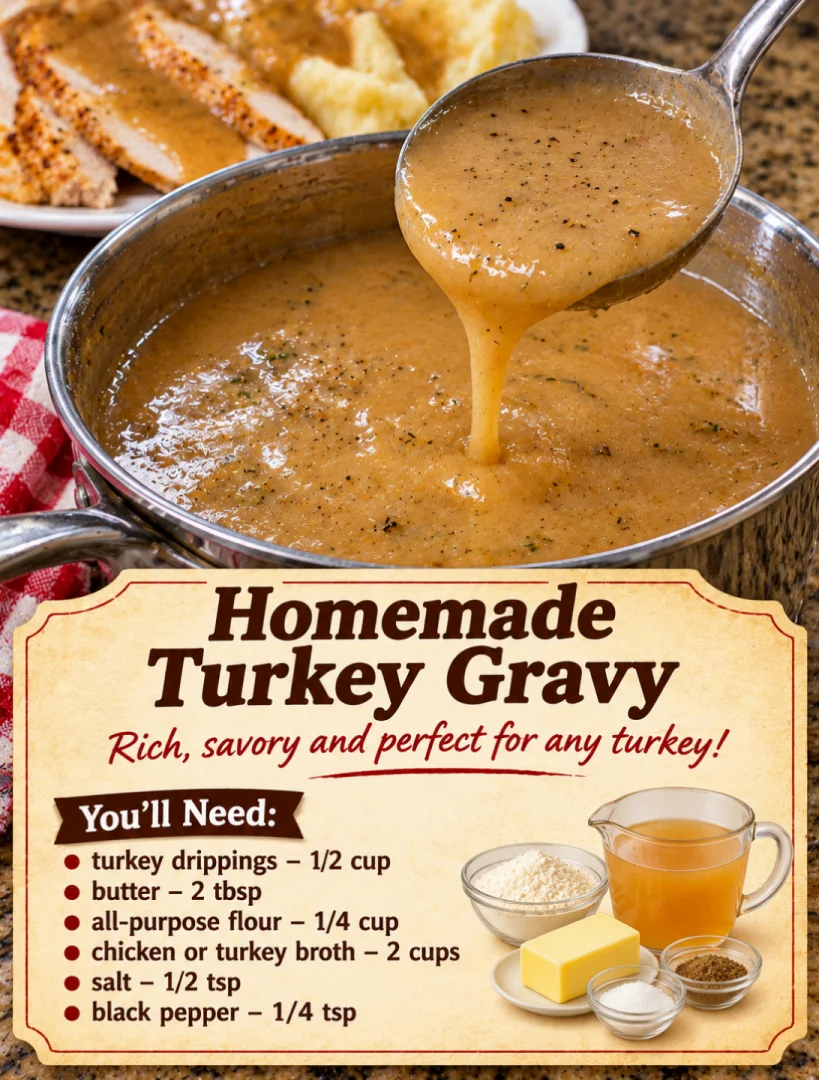
Homemade Turkey Gravy
There's something truly special about Homemade Turkey Gravy that elevates a holiday dinner from ordinary to extraordinary. Rich, savory, and full of flavor, this gravy is the quintessential accompaniment to a beautifully roasted turkey, particularly during Thanksgiving.
Ingredients
- 1 cup Turkey Drippings (from your roasted turkey)
- 2 cups Chicken or Turkey broth (homemade preferred)
- 1/4 cup Unsalted Butter
- 1/4 cup All-Purpose Flour
- Salt to taste
- Pepper to taste
- 1 teaspoon dried thyme or 1 tablespoon fresh thyme (optional)
Directions
Collect the Drippings: After roasting your turkey, carefully pour the drippings from the roasting pan into a fat separator. Allow it to sit for a few minutes so the fat rises to the top. Reserve 1 cup of the drippings, discarding any excess fat.
Prepare the Roux: In a medium saucepan over medium heat, melt the butter slowly. Add the flour, whisking continuously for about 1-2 minutes until the mixture is light golden and bubbly.
Add the Drippings: Slowly whisk in the reserved turkey drippings until fully incorporated. Continue whisking to smooth out any lumps.
Incorporate Broth: Gradually add the broth, whisking continuously. Bring the mixture to a gentle boil and cook for about 3-5 minutes until you reach your desired consistency.
Season: Taste your gravy and season with salt, pepper, and thyme if using. Adjust the seasoning as necessary.
Serve: Once your gravy is at the desired thickness and flavor, remove it from the heat. Transfer to a serving dish or gravy boat and serve warm.
Nutrition Facts
Recipe Reviews
- ★★★★★
Excellent recipe!
Leave a Reply
Your email address will not be published. Required fields are marked *





Excellent recipe!